
How to win at Jackaroo: 10 practical winning tips
Practical Jackaroo tips to win more games: when to bring marbles out, how to stay safe, and when to play the Seven, Four, Jack and King.
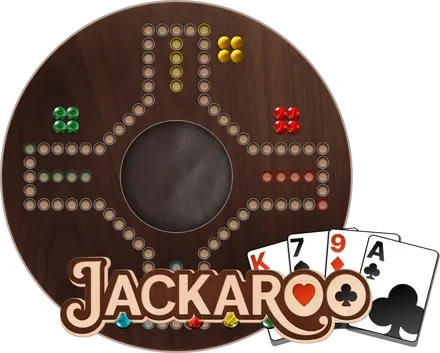
Jackaroo is a race, but the fastest marble doesn’t always win. Games are usually decided by who counts spaces before moving, who keeps their marbles out of reach, and who still holds the right card at the right moment. These ten tips assume you know what each card does. If you need a refresher, the Jackaroo rules cover every card.
1. Keep a way out of base
Only the Ace and the King bring a marble out of base. While you still have marbles waiting there, think twice before spending your last Ace or King as an ordinary move. A King’s 13 steps feel great, but if it was your only way to bring out the next marble, that marble may wait a long time.
2. Treat your start space as a shield
A marble on its own start space is protected. It can’t be captured or swapped, it blocks passage, and it even blocks the King’s 13-step move. A marble that has just come out is safe where it stands. The moment it moves on, it is unprotected, so choose when it leaves instead of moving it just because you can.
3. Count the spaces behind every marble
Forward moves cover every distance from 1 to 13: the Ace gives 1 or 11, the number cards move by their value, the Queen 12 and the King 13. The Four moves backward, so 4 forward only comes from splitting a Seven (4 + 3). So a marble sitting a few spaces in front of an opponent’s marble can be hit by many different cards.
Before each move, look at the opponents’ marbles behind yours. When you have a choice, end your move further from them.
4. Look down the path before you play a King
The King’s 13-step move sends every unprotected marble along its main-track path back to base, yours and your partner’s included. Count the 13 spaces first. When only opponents’ marbles are in the way, it can be the strongest move in your hand. When your own team is in the way, a Queen (12) or an Ace (11) is often the better long move. There is more on this in capture and protection.
5. Save the Seven for the finish
To get home you need the exact number of steps to reach a free home space, and marbles in the home lane can’t be jumped over. That turns the end of the game into a puzzle of exact counts, and the Seven is the best card for it, because it can be split between two marbles.
Example: one of your marbles needs 2 steps to reach a free home space. Your other marble is on the main track with an opponent’s marble close behind it. Split the Seven 2 and 5: the first marble gets home, and the second moves 5 spaces further away from the marble chasing it.
6. Use the Four as a shortcut
The Four moves a marble backward 4 spaces. Your marbles travel around the board before entering the home lane, so a marble that has only just left its start space has almost a whole lap ahead of it. Moving it back 4 puts it near the end of that lap instead, close to its home lane. The Seven and Four guide walks through examples.
7. Time the Jack
The Jack swaps one of your marbles with another player’s unprotected marble on the main track. The best swaps take your marble from far behind to close to your home lane, or take an opponent’s marble that is nearly home and put it where yours was. The same rule protects you: marbles in base, in home or on their own start space can’t be swapped.
8. Remember the Ten’s second option
The Ten moves 10 spaces, or makes the next player discard a card when that option is available. If moving 10 would leave your marble exposed or gains you nothing, making the next player lose a card can be the better use.
9. In Classic, play for the team
In Classic, partners sit opposite each other and win together when all 8 team marbles are home. Once your own marbles are home, you play your cards for your partner. Before that point you can still help:
- Don’t sit on your start space when your partner’s marble needs to get past it. A marble there blocks passage for everyone.
- The Five can move another player’s unprotected marble, so it can push your partner’s marble forward.
- If the first part of a Seven brings your last marble home, the remaining steps can help your partner.
10. Watch your replays
Diwaniye keeps replays you can watch again and share with a link. After a loss, find the moment a marble was captured or a King sent one of your own marbles back. That moment often decided the game, and you’ll spot it sooner next time.
Ready to put these tips to work? Play your next game of Jackaroo in Diwaniye.