
Common Jackaroo mistakes beginners make and how to avoid them
Ten common Jackaroo mistakes, from sweeping your own marbles with the King to blocking your own home lane, and the simple habit that fixes each.
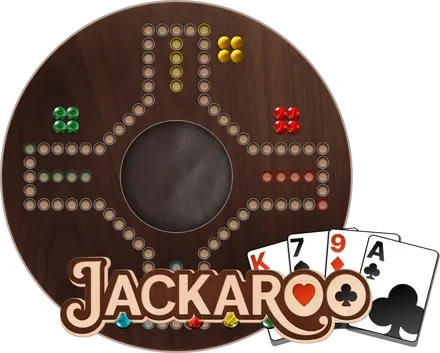
Most lost Jackaroo games don’t come down to bad cards. They come from a handful of habits that are easy to fix once you see them. Here are ten common beginner mistakes, each with a fix. If a rule here is new to you, check the Jackaroo rules or Jackaroo for beginners.
1. Sweeping your own marbles with the King
The King’s 13-step move sends every unprotected marble along its main-track path back to base, including your own and your partner’s. Beginners often play it because 13 is a big number and forget what is in the way.
Fix: count all 13 spaces before you play it. If a teammate’s marble is in that stretch, use a Queen (12) or an Ace (11) instead, or use the King to bring a marble out of base, which doesn’t sweep.
2. Spending your way out of base
Only an Ace or a King can bring a marble out of base. Using your last one for an ordinary move while marbles are still waiting in base can leave them stuck for many turns.
Fix: while you have marbles in base, treat your Aces and Kings as keys. Spend them on movement only when you have another way out or a clearly better move.
3. Parking right in front of an opponent
Forward moves reach every distance from 1 to 13 (4 forward only through a split Seven), so a marble sitting a few spaces in front of an opponent’s marble is in reach of many cards. Landing on an unprotected marble sends it back to base.
Fix: before each move, look at what is behind the space you are moving to. When you can choose, end further away, or leave a marble on its start space, where it is protected. Our guide to capture and protection goes deeper.
4. Blocking your own home lane
Marbles in the home lane can’t be jumped over, and you need the exact number of steps to reach a free home space. If your first marble stops on the first home space it reaches, it can stand in the way of the marbles behind it.
Fix: when you have the choice, take your first marble deeper into the home lane, so the next ones still have free spaces to reach.
5. Forgetting the Jack
An opponent’s Jack can swap one of their marbles with your unprotected marble on the main track. A marble of yours waiting just before your home lane is a perfect target: the swap gives them that spot.
Fix: move marbles into the home lane when the count allows. Marbles in base, in home and on their own start space can’t be swapped.
6. Wasting the Seven
The Seven can be split between two marbles, which makes it the most flexible card for exact counts near home. Playing it early as a plain 7 often leaves you without the right card later.
Fix: if another card does the same job this turn, keep the Seven. And in Classic, remember the order: the remaining steps can help your partner only if the first part brings your last marble home.
7. Pushing an opponent home with the Five
The Five can move another player’s unprotected marble, including an opponent’s. But moving an opponent’s marble forward also brings it closer to home.
Fix: use the Five on an opponent only with a reason, such as moving their marble off a space you need. Otherwise, move your own marble or your partner’s.
8. Sitting on your start space too long
A marble on its own start space is protected and blocks passage. That is useful against opponents behind it, but in Classic it also holds up your partner’s marbles.
Fix: when your partner’s marble is coming up behind your start space, move your marble on and let it through.
9. Switching off once your marbles are home
In Classic, the team wins only when all 8 team marbles are home. Once your own marbles are home you play your cards for your partner, so the game isn’t over for you.
Fix: count your partner’s spaces as carefully as you counted your own. The same goes for Fast Classic, where both partners must finish.
10. Ignoring the Ten’s second option
The Ten moves 10 spaces, or makes the next player discard a card when that option is available. Beginners often move 10 out of habit.
Fix: if 10 steps would leave your marble exposed or achieve nothing, consider making the next player discard instead.
Want to see good play in action? Diwaniye has a short narrated tutorial video for Jackaroo, and replays let you watch your own games again. Try to avoid these ten in your next game of Jackaroo in Diwaniye.